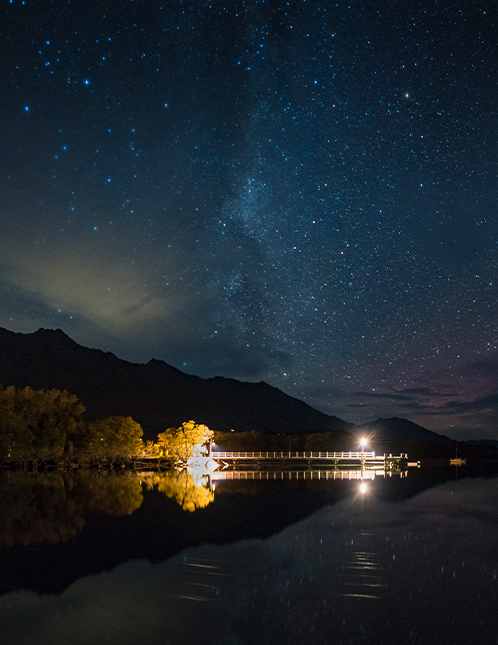
The Head of the Lake is a remarkable place to call home and those of us lucky enough to live here, really appreciate the amazing environment around us. The mountains are stunning in all weathers but closer inspection reveals that we have some big issues to grapple with as we balance a pristine environment with a diversity of opportunities to sustain our community.
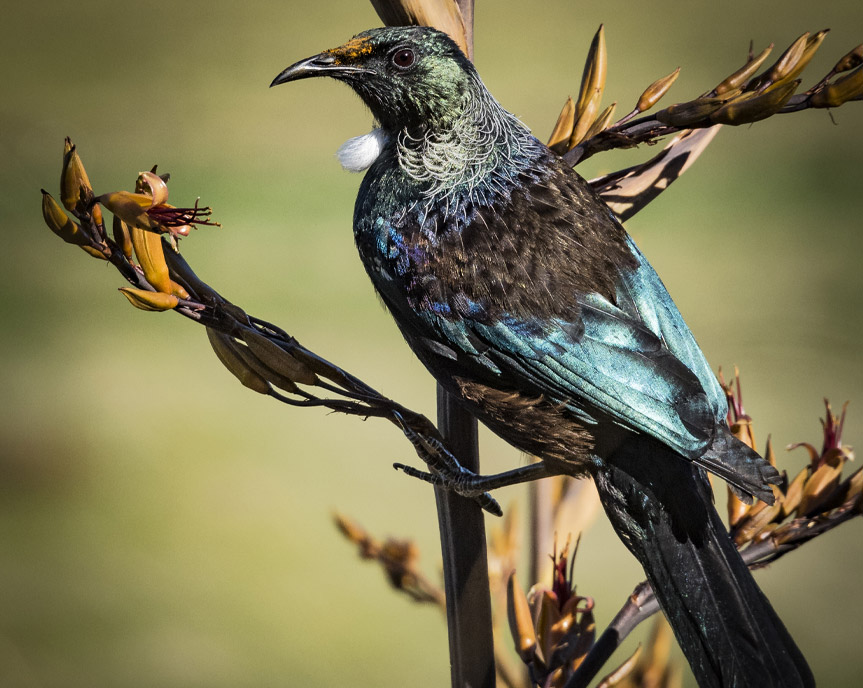
This is a place where the wild invites you in—and the people make you feel at home. A close-knit, creative community living in rhythm with the land, where life is simple, soulful, and deeply connected to nature.
Water quality testing by Otago Regional Council met the high standards now required by the ORC Water Plan and the farming community is managing to operate within these parameters. The township is slowly working towards a reticulated waste water system for the whole community to ensure good water quality at the Head of the Lake.
We still have a variety of native bird species in the surrounding valleys but the threat from introduced predators is enormous and ongoing. Rats, stoats, cats and possums are a huge challenge to our fauna and flora. The Routeburn Dart Wildlife Trust is an exciting initiative to work collaboratively with DOC to fund best practice predator control over 32,800ha of the Dart and its tributary valleys and many locals are actively killing predators in their own backyard.
Elsewhere in the community the swimming pool is heated by solar panels, plans for the new museum include sustainable power, Glenorchy Primary School has some great environmental initiatives underway and the new camping ground aims to meet strict sustainability criteria. Other private businesses are developing sustainable initiatives and the successful Stop the Tunnel campaign has morphed into Enviro GY to coordinate community environmental projects.
You can find an overview of these activities below and if you are keen to get involved, pleased contact the appropriate people.
Enviro Glenorchy morphed out of the ‘Stop the Tunnel’ group in 2013.
It was decided there was a need to keep an ‘active watch’ on the environmental wellbeing of the Head of the Lake. Enviro Glenorchy is still very much in the formative stage with a plan to become an incorporated society this year. We generally meet quarterly.
We’re very keen for more members to join the group. Contact Trish Fraser or ph: 442 9236 if you’re interested.
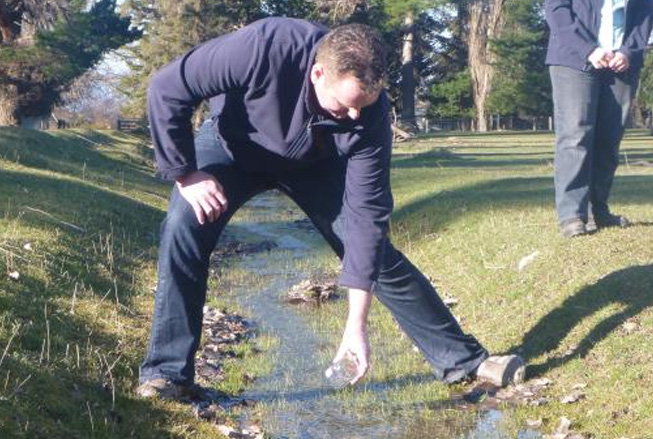
Glenorchy Landcare group works with ORC to understand water quality.
The Otago Regional Council, in conjunction with the Glenorchy Landcare group, carried out water quality sampling during the 2013/14 growing season within tributaries of Lake Wakatipu, from Greenstone Station around to Closeburn Station near Queenstown.
Initially Council met with the Glenorchy Landcare Group in June 2013 to outline changes to the Otago Water Plan involving setting of water quality limits within waterways, nitrogen leaching rates to groundwater, and prohibited and permitted activities.
Group members were keen to get more information about water quality in their area to see how it compared with water quality limits within Schedule 15 of the Water Plan. Although water quality information had been collected for the Dart River for a number of years, the group wished to build up a wider range of water quality data information from an increased number of waterways.
The group identified 18 tributaries within their area that represented both farming and native non-farmed catcments. Farming catchments included extensive high country grazing, semi-intensive hill country, and intensive flats.
Three rounds of sampling were carried out in the tributaries, December, February and May 2014. Testing was carried out for ammonia, nitrates/nitrites, dissolved reactive phosphate, turbidity and Ecoli. Ammonia, turbidity and phosphate met the water quality limits for all farming tributaries. There were some elevated Ecoli and Nitrates/nitrites on intensive flat country that will require some follow up. It should be noted that water quality results that are more than the Schedule 15 limits are not a compliance issue but can be viewed as an opportunity to identify management aspects that could give rise to elevated reasons. In some cases these may be non farming animal inputs.
Contact: Iris & Kate Scott Ph: 03 442 9908
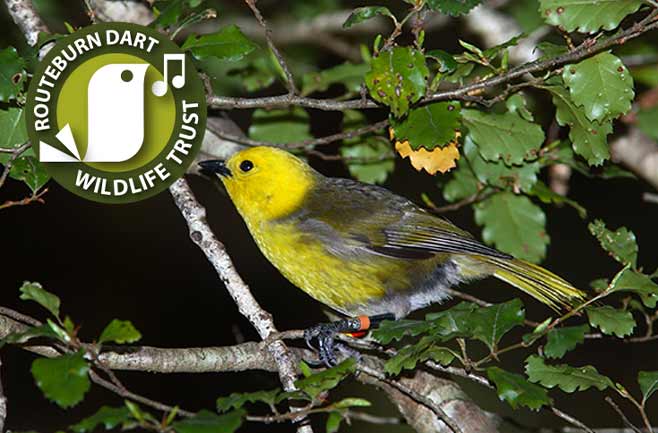
The Routeburn and the Dart Valleys are home to a wide range of native New Zealand birdlife.
Species still found here include Mohua, Robin, Kakariki, Rifleman, Kaka, Kea, Whio, and Rock Wren. The valleys are also home to New Zealand’s only native land mammal the Pekapeka or bat. They are also home to rats, stoats, possums and wild cats and unless we can maintain best practise pest control, our native species will continue to diminish.
Go to www.rdwt.org to see what’s happening.
Make a donation;
$100 buys a trap;
$160 pays a staff member for a day;
$5 buys a dozen eggs to bait the traps;
$20 buys a tracking tunnel;
$500 covers the costs of trapping 1 hectare.
If you would like any more information get in touch with one of our local ambassadors:
Amanda Hasselman Ph: 03 442 9942
Helen Clark
Kath Cahill

Residents in the community around Precipice Creek are conscious of the fragility of the ecosystem and the vulnerability of bird species that live in the area.
Some 38 different bird species have been recorded in the neighbourhood residing or in overflight with another 3-4 in close vicinity, and 16 other species within comfortable travel distance.
A pair of resident breeding Falcons are the pride of the list, living and nesting in the Precipice gorge and frequently seen in the skies above.
The Precipice Creek Residents association started a protection programme of trapping rats and stoats a couple of years ago and are also proactive in possum control.
It is hoped that the trapping programme will expand to cover a widening area around the gorge into the future as more resources become available. Native bats are also recorded in the area as well as skinks and geckos.
For more information or to get involved contact Vladka or Richard Kennett Ph: 03 442 9948
Vladka Kennett leads a Trust to assist the Department of Conservation in the restoration and upkeep of the scheelite mining history of Whakaari (Wyuna) Conservation Area.
With eight huts – 4 of which are protected for historic interpretation, and 4 open for overnight accommodation, there is plenty of opportunities for volunteers to be involved in a number of tasks to meet most levels of skill and activity.
Persons interested in volunteering to assist in this area which is an integral part of Glenorchy’s heritage with a fascinating history and stunning views should contact Vladka, ph: 03 409 0960.
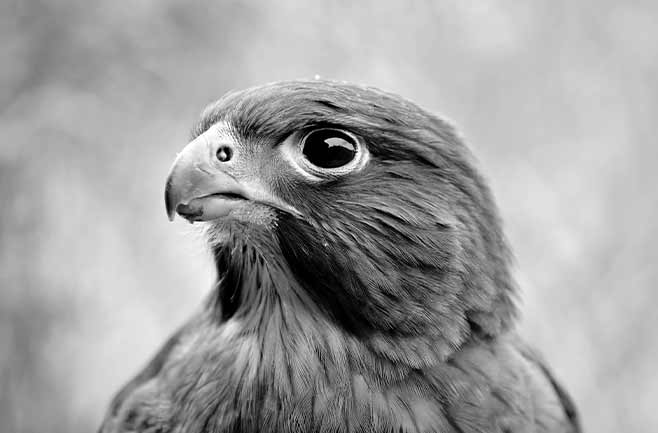
The Eastern Falcon Conservation Trust (EFCT) was established in 2014 to help ensure that that eastern falcons are sustainably re-established throughout the open dryland ecosystems of Canterbury, Otago and northern Southland. It is estimated there are approximately 3,500 eastern falcons and that this population is in decline. They are classified as near-threatened.
The Glenorchy area offers both open and forested mountain habitats that host robust populations of karearea (eastern and potentially bush falcons) therefore providing an ideal area for the EFCT to research and understand local falcon populations. An added bonus for the trust in becoming proactive in the Glenorchy area is the striking passion and commitment to conservation initiatives by the local community and surrounding run-holders.
Check out www.easternfalcon.org for more information on the trust and our falcon resources.
What can you do to help our kārearea?
Falconspotting
Keen and passionate observers contribute hugely to our knowledge and understanding of local falcon populations – the more eyes (and legs) in the field, the better! Become a citizen scientist – and be a ‘falconspotter’.
Please report any falcon sightings or interesting behaviours to us.
Please if you find a dead, sick or injured falcon photograph it in place and the wider context (if possible) and contact Glenorchy DOC Field Base (ph 03 442 7933) for advice. Dead falcons can provide significant research material so please collect any carcasses found and take to DOC. Sick or injured falcons can be taken to the Kiwi & Birdlife Park in Queenstown (contact DOC first if possible). Please also send any photos/details to us of falcons recovered or observed to be unwell.
Have you got problem falcons?
Falcons and chooks are not a good mix – free range chooks need plenty of falcon proof cover and/or impenetrable shrubby plantings. Also try darker coloured varieties – the darker and more camouflaged the better!
Please support our research endeavours
Supporting the trust through either donations or becoming a member goes directly into funding falcon research. As a charitable trust, a tax credit may be claimed on all donations. Check out our website for details.
Contact
Dr Donna Falconer (founder) 027 3534358, email
Glenorchy DOC Field Base 03 442 7933
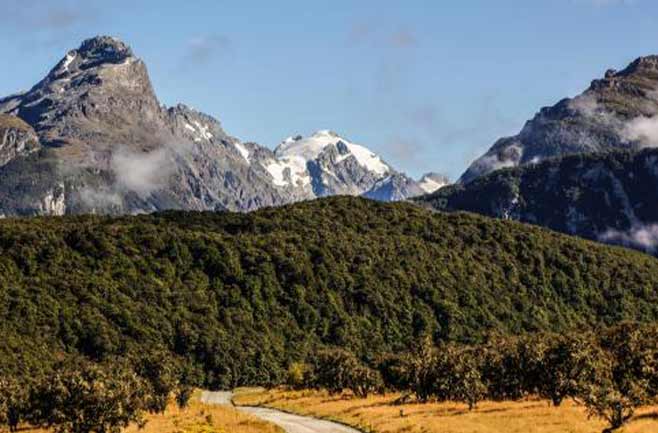
Paradise Trust currently has three projects underway as part of its Paradise Protection Plan. These projects all work towards preserving and enhancing the exceptional natural attributes of the property and protecting the native flora and fauna. All projects utilise volunteer assistance particularly through Help Exchange. The three projects include:
Replanting – Paradise has three established sites dedicated to the replanting of Kowhai trees that are grown from locally sourced seeds. This is part of Project Gold (a community/Doc initiative to ensure a golden future for Otago). Each volunteer to the property is required to plant a Kowhai tree and construct deer proof fence to protect it. The tree is then named after the volunteer and to date over 40 trees have been planted.
Weed Control – Paradise works closely with Doc to identify, control, reduce and eradicate where ever possible, invasive non native plants that threaten to spread through native beech forest. It is vital that these pest plants do not spread to the adjacent World Heritage areas – Aspiring and Fiordland National parks.
Animal Pest Control – This project was given a boost last year when it received a biodiversity grant (its first from Department of Conservation Doc) to go specifically towards its pest control efforts which include a network of stoat traps, bait stations and possum control. Paradise Trust is home to a number of nationally threatened species including the long-tailed bat. Since receiving the grant the Trust has already boosted its stoat/rat traps to 30 which provide good cover for the area surrounding the long tailed bats communal roosting site. The presence of communal roosting areas is not only vital to Doc but has proven to be a draw card for visitors to Paradise who enjoy “bat spotting” at dusk.
The key person involved in the above projects is Mandy Groshinski.
Phone: 03 442 9956